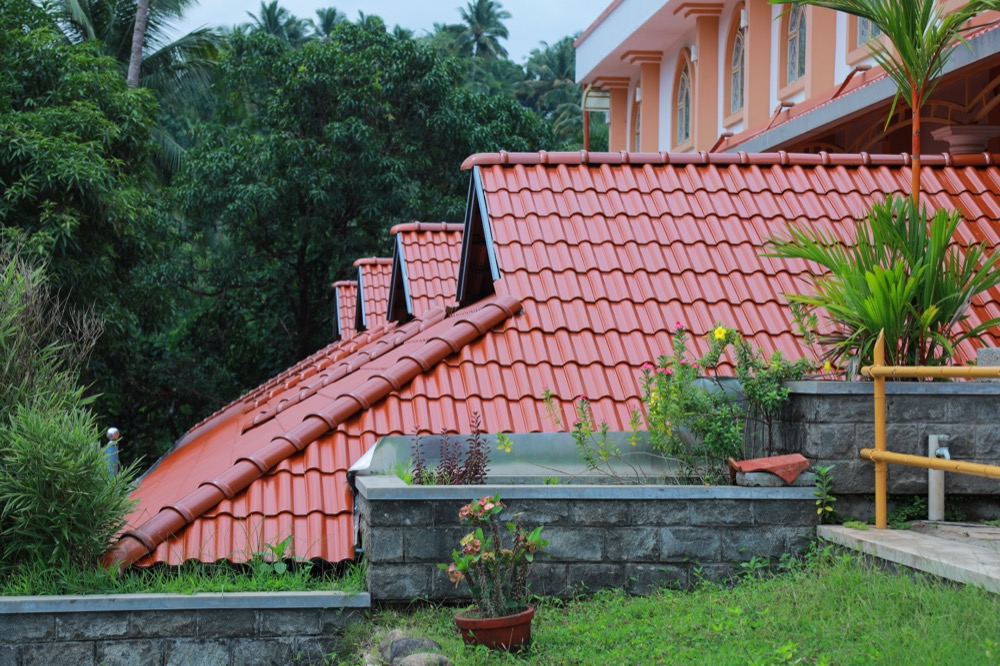
HISTORY OF ROOFING TILES

For a house or any building, in fact, the roof is as important as its foundation. Due to this, selecting your roofing solution is really a time consuming and confusing decision. There are various alternatives available to choose from and one of the best among them is roofing tiles.

Roofing tiles are often made out of clay and placed in a slanting fashion on your roofs. It helps to reduce heat during summers and prevents water clogging during monsoons.

This reason combined with the wide varieties and designs has made roofing tiles the go-to solution for any customer. We should take a look at why Roofing tiles have become a huge phenomenon it is now. From the first picture you drew as a child, roofs have always been about roofing tiles.
   

Ancient roots of the roof tiles

Clay has been widely used throughout human history for various purposes starting from pottery to roofing tiles. The use of clay roofing tiles has been seen dated as far back as 10,000 BC in many parts of China.

From that period onwards, clay roofing tiles became the synonym for roofing all around Asia. It also had a fair deal of usage in Middle Eastern countries and in settlements in Greece, Rome, and Egypt. Not widely used but still never forgotten.

Clay roof tiles have adorned the roofs of many famous Greek temples, Buddhist monasteries, and Hindu temples. It is a sure find in almost all of the famous archeological sites and historical buildings.

The Roman influence mainly helped the use of roofing tiles boom around Europe. The innovative Roman’s used the ‘Over and under’ clay tile structure while creating roofings for their dwellings.


Evolution and use in modern times in India:
  Clay roof tiles went away as the Roman Empire fell back from many parts of Britain. This would only reappear way later in the history of Britain.

A number of countries and cultures adopted the roofing tile as a solution. Indian roofs especially those of South India soon adorned these tiles.

This was just right for the weather conditions in South India. Roofing tiles can still be seen in old houses, ancestral homes that are several centuries old, and have seen multiple generations.

They have also been prominently used in building many temples and Architecture especially in Kerala, Karnataka, and parts of Tamil Nadu.

You can just go visit these ancient relics and still see the integrity and strength displayed by the roofing tiles there. Some are only partially damaged and many remain unscathed, standing the test of time.

The main reason it was used primarily in South India is the fact that it is the best solution for the weather and it is easy to install and look after with a large lifespan. The use of these roof tiles was almost like a mandatory tradition until some part of 1980s where concrete roofing became a trend with many people tempted to move on to it.

This was soon understood as a bad idea compared with roofing tiles and roofing tiles have again started becoming the go-to solution for roofing in places like Kerala and Karnataka due to the advantages it poses compared to concrete roofing.


The future of roof tiles:

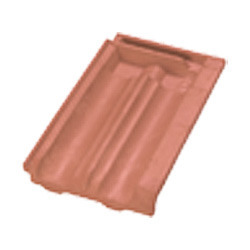
roof tile deep grey colour

 The use of roofing tiles have been so prominent in the past that it is quite impossible to think about a future without them.

With people understanding the importance of roof tiles and a wider variety of products with much better quality and color options available in the market, roofing tiles are sure to retain its position as the best roofing solution for a long time ahead.

The modern designers and architects have a tendency to fuse in modern architecture with the traditional elements. The roof tiles are one of those note-worthy traditional elements that appears with a modern face. 

The distinct colours and profiles of new age roof tiles gives in a royal charm to the houses. With the invention of new technology like photovoltaic cells and solar cells, innovative products like solar roof tiles may soon be launched in to the market.

Roof tiles, already a green and eco-friendly product, may get more exposure and usage if the products like solar roof tiles are successful. These may contribute a lot to the energy crisis and will be surely preferred across the households in the world.

Our view:

We often find that the choices, thoughts, and lifestyles of our ancestors are quite inspiring for us millennials. Roofing tiles are one such beautifully and meticulously crafted piece of clay that is sure to keep your homes safe, beautiful, and strong.

This idea of our ancestors combined with the raw quality and strength provided by manufacturers surely has made the roofing tile the best solution there is.

This is why we recommend you to try out the best quality roofing tiles available in the market at a very reasonable price.

KPG is your best choice for all things roofing. With some of the best products and services in the segment, we are the market leaders ready to shelter homes and keep you safe during these hard times.

KPG Roof tiles Vs Traditional Clay Roof tiles

Ceramic roof Tiles offer many great benefits including durability, Color permeability, longevity, energy-efficiency, great curb appeal, low maintenance, heat resistance and  wind mitigation (with proper installation and maintenance), fire safety, and more. KPG Branded Tiles are designed by perfect combination of high quality Ceramic and White clay ingredient.  White clay provides superior reflectivity, heat resistance, relatively lightweight, long lasting, fire and weather resistant, Low maintenance and Ceramic provides extremely hardness and durability.

Traditional clay tile roofing

Clay Tiles have been the most popular roofing material since ages. The durability and prevention of heat makes clay tiles more preferred over shingles, roofing sheets etc. These tiles are made by baking red clay at a very high temperature in the kiln. The porous structure of the roof tiles gives you a cool breezing effect also.

Eventhough one of the oldest and the most famous in the market, the clay tiles comes with a lot of drawbacks. The main one being the inability of the red clay tiles to withstand varying temperatures. The red clay is drawn to algea and fungus. Often the bright reddish colour of the red clay fades within 2-5 years due to the weather conditions. The density of red clay is lesser when comparing to the white clay, so more amount of red clay is needed to make the tiles stronger. Due to this, red clay are normally heavier than white clay and needs more truss work. The water absorbtion of clay tiles are also high, since the base material is standard clay itself.

  • Durable and longer life span than concrete tiles / roofing sheets
  • Prevents heat
  • Raw material is commonly seen red clay.
  • Effective covering area of 0.75 sq. feet per tile
  • Less efficient in varying temperature
  • Prone to algae and fungus
  • Absorbs more water
  • More heavier and needs stronger frame work to hold
  • Colour fades within short time

KPG Branded ceramic roof Tiles

Modern day KPG roof tiles offer great value for money as well as specific advantages over the alternative roofing materials. These have longer life compared to the traditional clay tiles, thanks to the white clay content and extreme compression techniques by the factory. The porcelain content give more strength to the roof tiles and have a load bearing capacity of 250 KGs. The ceramic coating in the external shell gives more resistance to the varying weather conditions. The water will be repelled by the coating and no water will be absorbed by the tiles. The colours have 3 layers of coating, triple than any other ceramic roof tiles, that ensures colours stays forever. At a glance, the advantages are:

  • Durability and have longer life than clay roof tiles
  • Prevents heat
  • Effective covering area of 1 sq. feet per tile
  • KPG tiles are water-proof, fire-proof, rust-proof and weather-proof, making it one of the most durable construction materials.
  • They can withstand any weather and their color does not fade away. KPG roof tiles even offer a 30 year warranty on the color. KPG roof tiles won’t rust, fade, warp, disfigure or corrode.
  • Prevents algae and fungus
  • The base material used to manufacture KPG tiles are natural white clay.
  • Due to KPG tiles being extremely durable, maintenance costs ranges from zero to Zero.
  • KPG Branded tiles are lighter (2.2 kg) than traditional clay tiles (2.8 kg) and have much more density. This ensure the KPG roof tiles are more stronger and durable than clay roof tiles.
  • Load bearing capacity of 250 kgs
  • Visually Stunning and premium looks.
  • Available in 15+ colours.

In addition to the effective advantages KPG tiles offer, they also look wonderful and have a distinctive European appeal due to their longevity and durability, your home will retain its aesthetic appeal for a long period of time. Also, because KPG tiles can be in standard shapes and sizes, one does not need to worry about their home looking like one of many clay tiled roofs.

Conclusion


Considering the base material, both are naturally occurring clay and completely natural. Still, in terms of quality, reliability, density, strength etc KPG roof tiles are far more superior than normal clay roof tiles. Also the red clay tiles are not popular for withstanding weather conditions, and is infamously drawn towards algae and fungus. KPG Branded Tiles are designed by perfect combination of high quality Ceramic and White clay ingredient. White clay provides superior reflectivity, heat resistance, relatively lightweight, long lasting, fire and weather resistant, Low maintenance and Ceramic provides extremely hardness and durability.

The effective coverage area is also lesser, so in a cost wise comparison including the installation and maintenance, we can see that kpg roof tiles are a better bet than the traditional roof tiles.

You can select from 15+ colour samples of KPG roof tiles from our various outlets across kerala.

NB: Red clay tiles are also available at premium quality for a slightly better price. These are harder than traditional clay tiles and offer much better durability and colour.